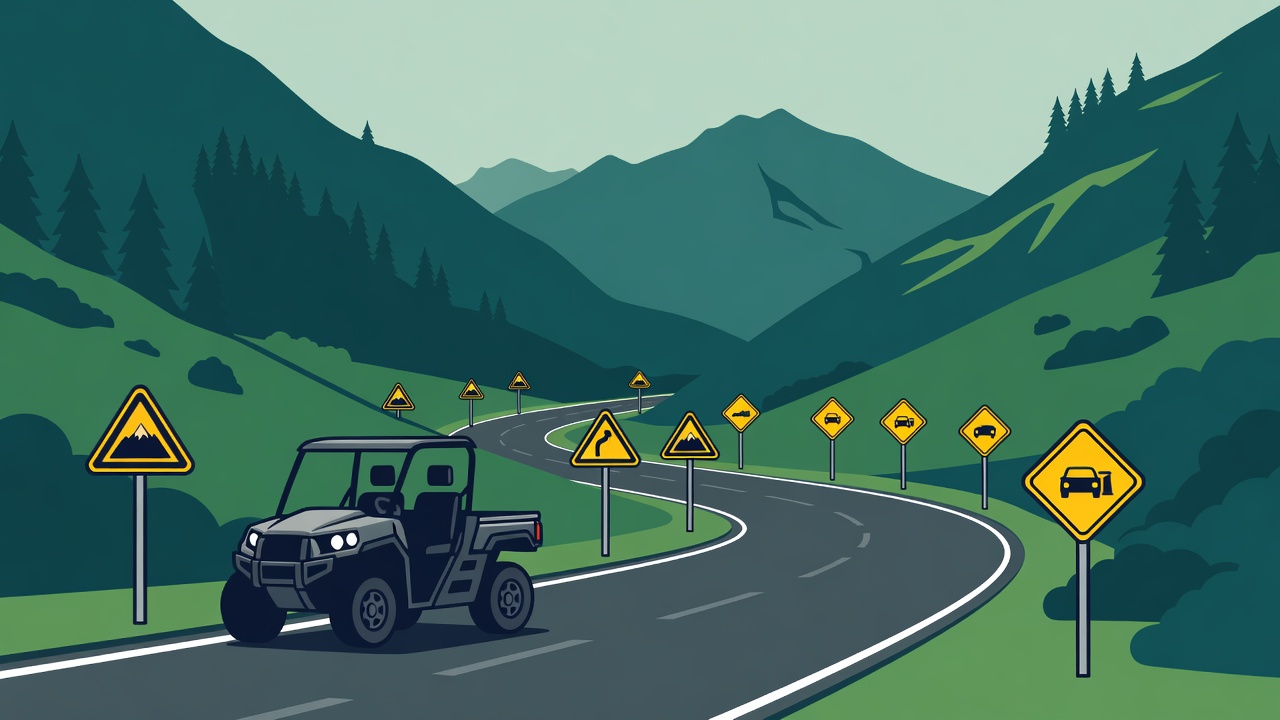
Check the road you will actually use
Begin with the particular road sections on your itinerary, not just the destination name. A region can be welcoming visitors while one connecting road is closed. Look for official notices about closures, works, vehicle restrictions, tolls, park entry and seasonal access. Read the time and scope of each notice. A warning for a mountain section may not apply to the valley road, while an open approach may still lead to a closed onward crossing.
Repeat the check shortly before departure and when circumstances change. Saved screenshots and offline maps are useful backups, but they are not live updates. If official signs, barriers or instructions differ from your navigation app, follow the lawful on-site instructions. Do not use a minor road as an assumed detour without checking its suitability. It may be private, seasonally closed, restricted or unsuitable for your vehicle even if software draws a continuous line through it.
Official starting points, by region
Use the authority responsible for the road and the weather service responsible for the area. The links below are starting points, not a guarantee that they cover every local lane, park road or attraction. Local authorities and land managers may publish additional notices. We are independent and are not affiliated with these organisations.
- California: Caltrans QuickMap for state-road traffic information and closures.
- Victoria: VicTraffic for road information and Parks Victoria for park notices.
- Scotland: Traffic Scotland for trunk-road information; check council sources for local roads.
- Norway: Statens vegvesen for road traffic information.
- Ireland: Traffic Ireland for national roads and Met Éireann for weather.
- Glacier National Park: National Park Service conditions for park-specific notices.
Understand the vehicle before the interesting road
Review tyre condition and pressures using the manufacturer's guidance, including adjustments for the actual load where specified. Check lights, visibility, wipers and relevant fluid levels. If you are unsure about mechanical condition, ask a qualified professional before travel. Do not treat a general checklist as a substitute for servicing or a vehicle inspection. With a rental, record existing damage and learn the controls while parked, including lights, demisting, parking brake and any transmission-specific features.
Know the vehicle's height, width and any restrictions relevant to your route. Large campervans and trailers may be excluded from roads that ordinary cars can use. Confirm rental permissions, insurance limitations and cross-border conditions in writing where appropriate. Carry the driving and vehicle documents required in the jurisdictions you will visit. Licence recognition, international driving permit requirements, winter equipment and mandatory safety items vary; verify them with official sources rather than assuming rules are the same across a border.
Give fuel and charging their own plan
Identify realistic refuelling or charging opportunities before entering a remote area. Do not rely on a single location without a backup. Opening hours, payment methods, connector compatibility and service availability can all affect the plan. For electric vehicles, hills, temperature, speed and cabin heating or cooling can change energy use. Use the vehicle's guidance and suitable current planning information, and leave a comfortable reserve rather than planning to arrive nearly empty.
Charging stops can be useful meal or walking breaks, but only when the practical details work. Check whether a charger requires an account or app, whether the car park has its own restrictions and whether facilities are available at the time you expect to arrive. Downloading an app is not evidence that a particular unit will be working. Keep an alternative that you can reach safely within your remaining range.
Prepare for losing signal, time or good weather
Save essential addresses and download appropriate maps before leaving reliable connectivity. Bring a suitable charging cable and make sure the driver does not need to handle a phone while moving. Share your broad plan with someone you trust where useful, especially for remote journeys. Carry drinking water, suitable clothing and any personal medication you need. Adapt supplies to the region and season; a warm town departure does not describe conditions on a high pass.
Fatigue is a reason to change the day, not a problem to solve with enthusiasm. Plan breaks, share driving only with authorised and capable drivers, and stop somewhere safe if concentration declines. If a vehicle problem or an incident occurs, prioritise a safe position and follow local emergency guidance. This site is not an emergency service. Learn the relevant local assistance arrangements before travel and keep recovery details available offline.
Make the last check a decision, not a ritual
Before leaving, ask whether the plan still fits today's conditions and the people in the car. If the answer is no, shorten it. An accessible lower route, a nearby walk or a rest day is a legitimate road-trip choice. Preparation is successful when it helps you make that change early, calmly and without needing a scenic promise to overrule what the road is telling you.